


Auto Repair Shop Business Plan Template (Word, PDF & Financial Projections)
Open your auto repair shop with a clearer plan. This editable auto repair shop business plan temp...
Read more →Couldn't load pickup availability
Starting a heat transfer shop is exciting until you sit down to explain it to a bank. This heat transfer business plan template gives you a lender-ready roadmap in editable Word and PDF, plus a matching 36-month Excel-style forecast, so your custom apparel concept reads like a serious U.S. business instead of a side project.
In plain English, it walks through DTF and HTV workflows, Cricut and Silhouette setups, blank garments, and marketplace fees, then ties everything back to orders per day and press minutes per item. You’ll see how equipment, helper hours, online channels, and local pop-ups fit together in one organized document you can actually present.
For lenders and partners, the plan connects pricing tiers, rush fees, and bundle offers to margin and cash flow they can underwrite. What would it feel like to slide a clean, specific, heat-transfer-focused business plan template across the desk, instead of a generic download that ignores your real production workflow?
A heat transfer business plan template is a professionally written guide that organizes your custom apparel concept, market analysis, production workflow, and 36-month financial model into one lender-friendly file. This downloadable package includes an editable Word document, matching PDF, and a pre-built forecast for U.S. founders selling through Etsy, Shopify, local events, or wholesale. Here’s why this matters for lenders: the assumptions are realistic, defendable, and tied to real press capacity and order volume, which helps your numbers stand up in underwriting—produced by BPlanMaker.
Custom apparel and merchandise continue to grow across the U.S. as creators, local brands, schools, and small businesses look for short-run, on-demand printing instead of large screen-print minimums. In practice, heat transfer operators compete on turnaround time, design flexibility, and the ability to profitably handle small batches for niche audiences. Lower-cost presses, desktop printers, and user-friendly cutting machines have made it easier than ever to launch from a spare room, garage, or modest storefront.
At the same time, competition on Etsy, Shopify, and marketplaces is intense, so owners who win usually combine sharp branding with tight control of blanks, waste, and shipping costs. Local partnerships with schools, teams, clubs, and small businesses often provide steadier B2B volume alongside seasonal spikes for holidays and events. For lenders, what matters most is whether your plan shows believable throughput—orders per day, items per order, and minutes per press cycle—backed by clear pricing and labor assumptions instead of guesswork.
Here’s why this matters for break-even: your ability to keep presses running at sustainable utilization, protect margins after marketplace fees and shipping, and avoid underpricing rush or custom work is what separates a busy shop from a profitable one. A realistic, defensible set of assumptions gives lenders confidence that your shop can cover fixed costs and grow beyond hobby level.
Classification/licensing: NAICS 323113 — Official NAICS page. Industry background: U.S. Small Business Administration.
Trusted by 6,000+ entrepreneurs. Built for real funding, real permits, and real operations.

This done-for-you heat transfer business plan template gives you a complete narrative and numbers package tailored to DTF, HTV, and vinyl-cut workflows. Instead of starting from a blank screen, you plug your products, channels, and pricing into a structure that already speaks the language of lenders, investors, and serious partners.
The executive summary frames your heat transfer shop in a few clear pages—what you sell, who you serve, how you’ll operate, and how much funding you need. It highlights your mix of online and local sales, startup gear, and early goals for order volume and margin. For lenders, this is the top-level snapshot that shows you understand both the creative and the financial side of the business.
This section lays out your offers in practical tiers—standard shirts and hoodies, premium garments, bundles, personalization, and bulk B2B orders for teams, clubs, or small businesses. In practice, it explains how rush fees, design add-ons, and upsells like mugs or totes boost your average ticket size. Founders use this to avoid underpricing and to show lenders how each order type contributes to total revenue.
Here you walk through the customers you’ll serve—online shoppers looking for niche designs, local schools and charities, event organizers, and small brands that need low-minimum runs. The plan discusses marketplace dynamics on Etsy and Shopify, plus local competition from screen printers and other custom shops. At a high level, it shows lenders that there is real, ongoing demand for short-run, custom printed items in your niche and geography.
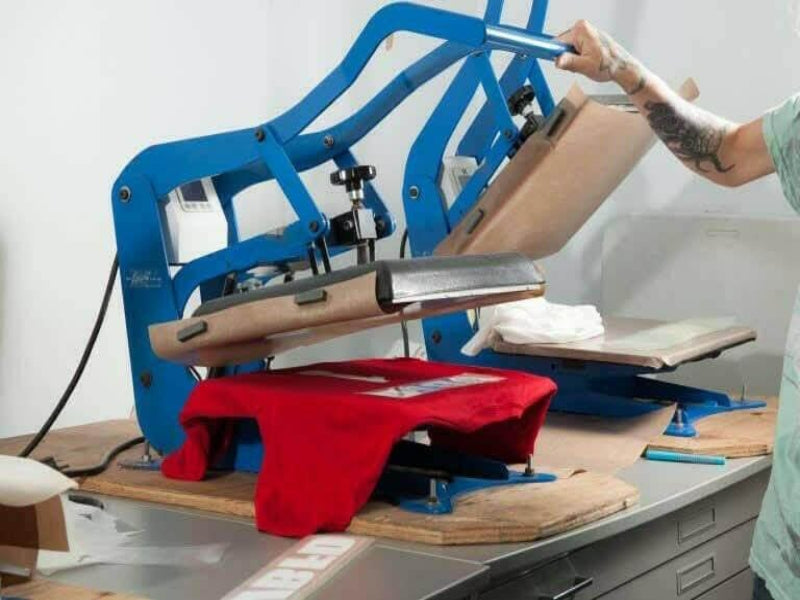
This part describes your production flow step-by-step, from receiving orders and artwork to printing transfers, pressing garments, cooling, packing, and shipping or pickup. It covers workspace layout, ventilation, storage for blanks and finished goods, and safety basics around heat and electrical use. For lenders, it confirms you’ve thought through capacity, error reduction, and consistent quality—not just buying gear and hoping it all works out.
The marketing and growth section explains how you’ll win your first customers and keep orders coming in—Etsy SEO, Shopify product pages, social media, short videos, local pop-ups, and B2B outreach. In practice, it also shows how you’ll encourage repeat orders through email updates, limited-run drops, and seasonal campaigns. A realistic outreach plan gives lenders confidence that your presses will have enough demand to justify the investment.
This section outlines your role as owner, any co-founders, and how part-time helpers or family members fit into production and fulfillment. It covers training on artwork preparation, color checks, press settings, quality control, and packaging standards so the customer experience stays consistent as you grow. For lenders, it shows that you have a plan to move beyond a one-person bottleneck when volume increases.
The 36-month forecast connects orders per month, items per order, and average price per item into a usable income statement and cash-flow picture. It includes startup capital, equipment, blanks, software, marketplace fees, and packaging costs so margins are visible instead of hidden. For lenders, this is where your break-even, profit potential, and payback timeline become clear—and where realistic assumptions matter far more than perfect predictions.
This heat transfer business plan template is built for U.S. apparel founders running DTF or HTV setups from home, a studio, or a small storefront, as well as existing print shops adding digital transfers to their lineup. It also fits Etsy and Shopify sellers who want to show banks, partners, or family members that their custom merch idea has a structured, lender-aware plan behind it.
Unlike one-size-fits-all documents, this heat transfer business plan template is written around real production workflows, online marketplaces, and local B2B relationships. It mirrors SBA-style structure, uses realistic apparel assumptions, and gives you editable tables instead of locked PDFs. For lenders, the result is a plan that feels grounded in the way actual shops operate, not a generic form letter.
You receive an editable Word document, matching PDF, and a 36-month financial model designed for custom apparel. The narrative covers your concept, market, operations, and marketing, while the forecast highlights orders, items per order, labor, blanks, fees, and shipping so your numbers are easy to defend.
Yes. You can tailor the plan to DTF, HTV, vinyl cutting, sublimation, or a mix, and adjust it for Etsy, Shopify, in-person events, or B2B accounts. The wording is flexible, so you can describe your own machines, blanks, turnaround times, and brand voice without breaking the structure.
The sections mirror what SBA lenders and banks typically expect—executive summary, market analysis, services, operations, management, and a three-year forecast. While no template can guarantee approval, this structure makes it easier for reviewers to follow your story and evaluate the risks and rewards of funding your shop.
Most founders can customize the narrative in a day or two and refine the numbers over a weekend. Because the key headings and prompts are already in place, you spend your time adjusting details like SKUs, pricing, and capacity—not guessing what to write next.
Yes. The 36-month forecast includes space to factor in blanks, packaging, marketplace fees, transaction costs, and shipping so you can see your true landed cost and net margin. A realistic view of fees helps you set prices that protect profit instead of eroding it.
After checkout you’ll receive instant digital access—no shipping, no waiting. Your purchase is a one-time, single-business license for the downloadable files, and because products are delivered immediately, all sales are final. The template does not replace legal, tax, or accounting advice; you should confirm local requirements with qualified professionals.
Every month you wait, competitors lock in the best repeat customers, team accounts, and local partnerships. This plan helps you step in with a clear story, a structured production workflow, and numbers that make sense to lenders.
Use this heat transfer business plan template to move from hobby-level tinkering to a shop with mapped-out pricing, capacity, and cash flow. You focus on great designs and fast turnaround; the plan keeps your strategy and projections organized.
Download your lender-ready plan today and show banks, partners, and customers that you’re building more than a side hustle.
Last updated: 2025 by BPlanMaker.
BPlanMaker


Still researching your plan? Explore our latest articles on writing a stronger business plan, using your business plan template, and getting ready for lenders, investors, and SBA programs.
Open your auto repair shop with a clearer plan. This editable auto repair shop business plan temp...
Read more →
Open your daycare with a clearer plan. This editable daycare business plan template includes a Mi...
Read more →
Planning to start a lawn care business? Learn what a professional business plan should include an...
Read more →