


Auto Repair Shop Business Plan Template (Word, PDF & Financial Projections)
Open your auto repair shop with a clearer plan. This editable auto repair shop business plan temp...
Read more →Couldn't load pickup availability
A cpr training business plan template is a ready-to-use, lender-review-friendly document that outlines startup costs, operations, market positioning, and three-year financial projections for launching a cpr training business in the United States. Priced at $50, this template provides a faster, more affordable path to funding readiness than hiring a consultant or writing a plan from scratch.
What you get in this instant download:
Best for: entrepreneurs, owner-operators, and startups preparing to validate a cpr training concept, communicate execution details, and launch confidently with a clear, lender-ready operating and financial roadmap.
Tip: Use this overview when comparing templates, preparing lender conversations, or confirming you have the sections required for funding review.
Starting a CPR training facility is a real public-safety business — you’re helping workplaces, schools, and families meet lifesaving standards. This CPR training business plan template gives you a lender-ready structure in editable Word and PDF, plus a built-in 3-year financial forecast so you can show exactly how your classes earn, spend, and scale.
In practice, founders use this to map course offerings (CPR/AED, First Aid, BLS, ACLS, pediatric safety), set tuition and class capacity, and build repeatable delivery models — classroom-based, mobile onsite teams, or hybrid scheduling with a simple LMS. Here’s why this matters for lenders: they want to see clear demand, documented compliance processes, and a realistic, defensible set of assumptions behind enrollment and contract revenue.
Want to launch faster without guessing at margins, staffing, or contract targets? This plan is built to keep you focused on what actually drives funding approval and long-term renewals.
CPR training business plan template: A complete, SBA-aligned plan (Word & PDF) with seven lender-ready sections and a 3-year financial forecast for CPR, First Aid, BLS/ACLS, and AED certification businesses.
1) Executive Summary. Summarize your CPR training facility in one tight, lender-friendly page: course menu, target clients, competitive edge, launch timeline, and the exact funding ask. You’ll also state how money is used (training manikins, AED trainers, classroom build-out, marketing, instructor onboarding) and the first milestones you’ll hit. This is written to feel operational and credible to a bank reviewer, not like a generic school pitch.
2) Company & Program Overview. Detail your legal setup, ownership, and service model — fixed classroom, mobile onsite instruction, or hybrid. You’ll define your training standards, certification partners you align with, student experience, and how you handle renewals and recordkeeping. For lenders, this section proves you understand the compliance posture of a health-and-safety education business in the U.S.
3) Courses, Products & Services. Lay out each class you plan to offer (CPR/AED, First Aid, BLS, ACLS, pediatric CPR, bloodborne pathogens, workplace safety add-ons), how long sessions run, your maximum seat count, and what’s included in tuition. You’ll also cover any ancillary revenue such as corporate retainer packages, group rate tiers, and equipment sales where appropriate. The aim is to show a smart, profitable course mix with clear delivery capacity.
4) Market Analysis. Identify who buys CPR training in your area: employers needing OSHA-aligned safety coverage, schools and childcare providers, healthcare licensing tracks, community groups, and individual renewals. You’ll document local demand drivers, training frequency cycles, and how clients currently find providers. A clean competitor scan helps you show the gap you fill — faster scheduling, mobile coverage, better renewal reminders, or industry-specific tracks.
5) Operations Plan. Map how your facility runs day-to-day: instructor hiring and certification checks, class calendar setup, student enrollment flow, equipment cleaning/maintenance, card issuance, and records retention. You’ll outline room or mobile-kit requirements, supply reorder points, and the tools you use for reminders and renewals. In plain English, this makes your workflow easy for a lender to trust and for you to execute.
6) Marketing & Sales Strategy. Build a practical client-acquisition plan: employer outreach, partnerships with schools/clinics, local SEO for “CPR classes near me,” community events, and referral relationships. You’ll also set a retention track (renewal reminders and re-cert cycles) because repeat certifications are a core revenue engine. For lenders, this section proves you’re not relying on hope — you’re relying on measurable pipelines.
7) Financial Forecast. A 3-year model that includes startup costs, monthly operating expenses, instructor payroll, class revenue by course type, corporate contract income, and seasonal enrollment shifts. You can adjust tuition, seat fill rates, onsite pricing, marketing spend, and renewal volume to match your market. The result is a clear break-even path and cash-need picture a bank can evaluate quickly.

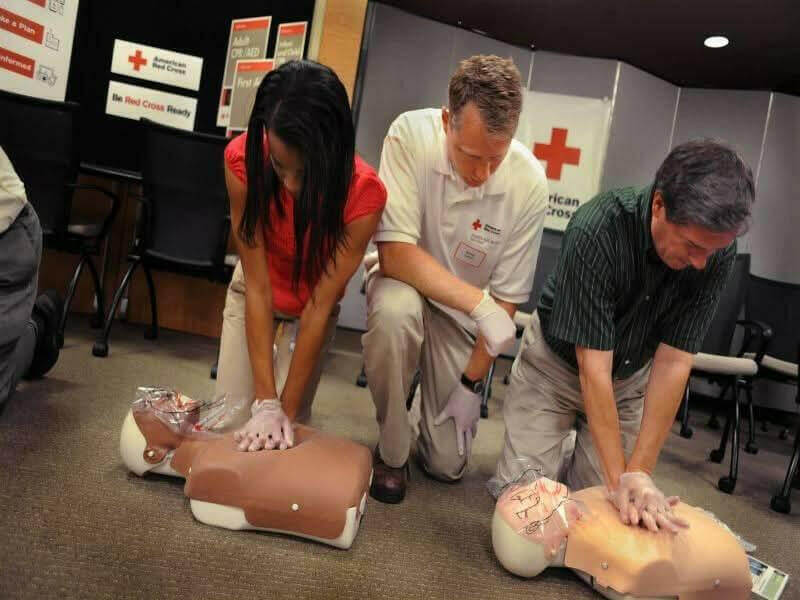
For nationally recognized CPR training standards and course formats, review the American Red Cross training overview. Red Cross CPR class standards
Risk-free: no consultant fees. Edit instantly. SBA & investor-ready.
It’s a full roadmap for how your CPR/First Aid/BLS training business operates and earns profit — class structure, pricing, staffing, compliance, marketing, and a 3-year forecast. This template follows a lender-ready SBA format and is easy to tailor to your local market.
Yes. You can customize the operations and marketing sections for a classroom facility, a mobile onsite training unit, or a hybrid model. The financials are editable so your travel fees and seat capacity reflect your setup.
Absolutely. The plan includes clear use-of-funds, market proof, compliance workflows, and realistic projections — the same elements banks, SBA reviewers, and grant panels look for.
Yes — update tuition, class frequency, seat fill rate, instructor hours, equipment costs, marketing spend, and corporate contract volume. The 3-year projections adjust to match your real numbers.
Immediately after checkout. You’ll download both the Word plan and the PDF version right away, so you can start customizing today.
Walk into funding meetings with clear enrollment logic, compliant operations, and a credible path to employer contracts already formatted for SBA and bank review.
Download, edit, and present your CPR training business plan template this week.
BPlanMaker


Still researching your plan? Explore our latest articles on writing a stronger business plan, using your business plan template, and getting ready for lenders, investors, and SBA programs.
Open your auto repair shop with a clearer plan. This editable auto repair shop business plan temp...
Read more →
Open your daycare with a clearer plan. This editable daycare business plan template includes a Mi...
Read more →
Planning to start a lawn care business? Learn what a professional business plan should include an...
Read more →